Turntable
Modified EMT950
An EMT950 turntable was modified to accommodate the large discs in the collection and provide stable, controlled playback during the transfers.
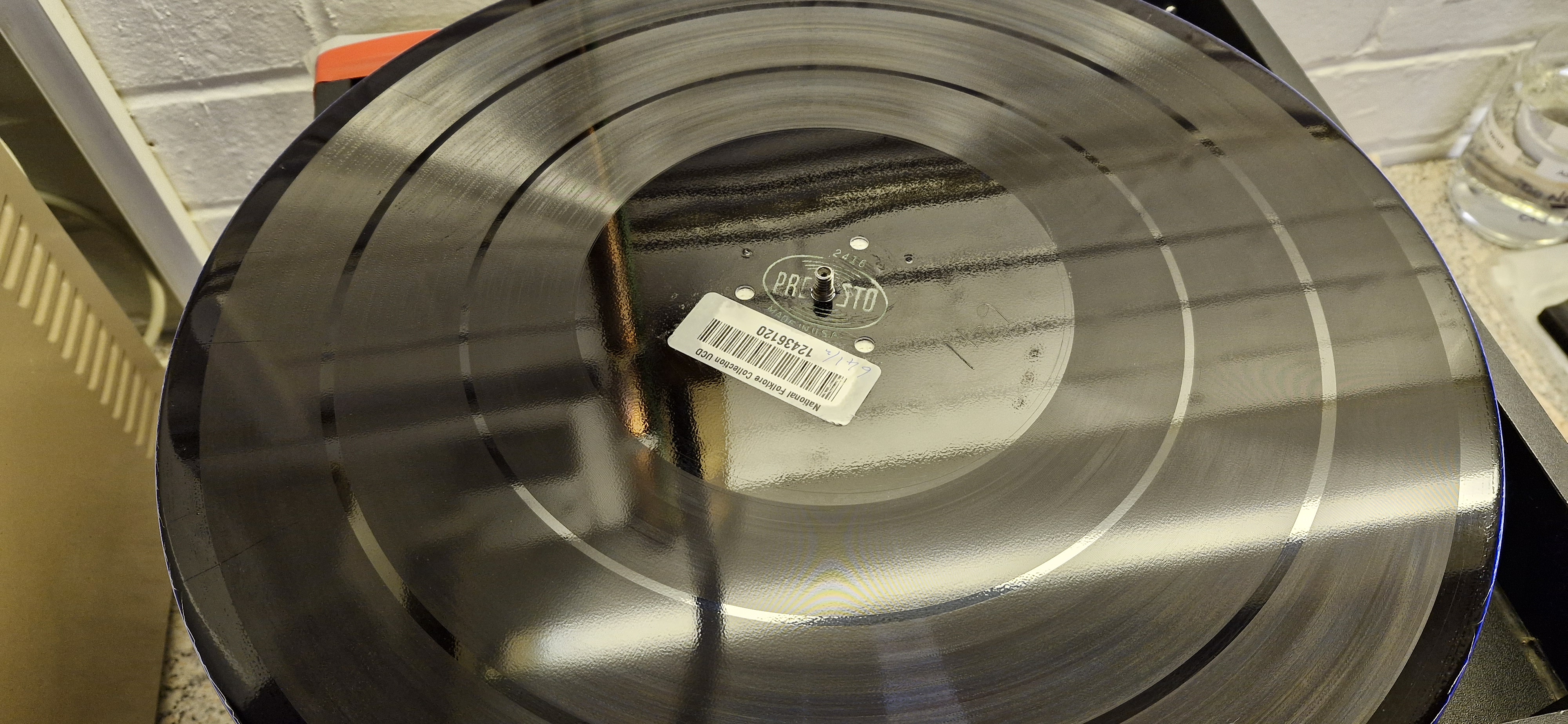
Specialist cleaning, preparation and archival digitisation of 900 acetate discs from the National Folk Collection for Dublin University.
National Folk Collection
Oxford Duplication Centre undertook a specialist digitisation project for Dublin University involving 900 acetate discs from the National Folk Collection. The project required careful physical preparation as well as specialist audio playback, because many of the discs showed significant surface contamination, palmitic acid residue, corrosion, scratches, cracks and other signs of age.
Condition & preparation
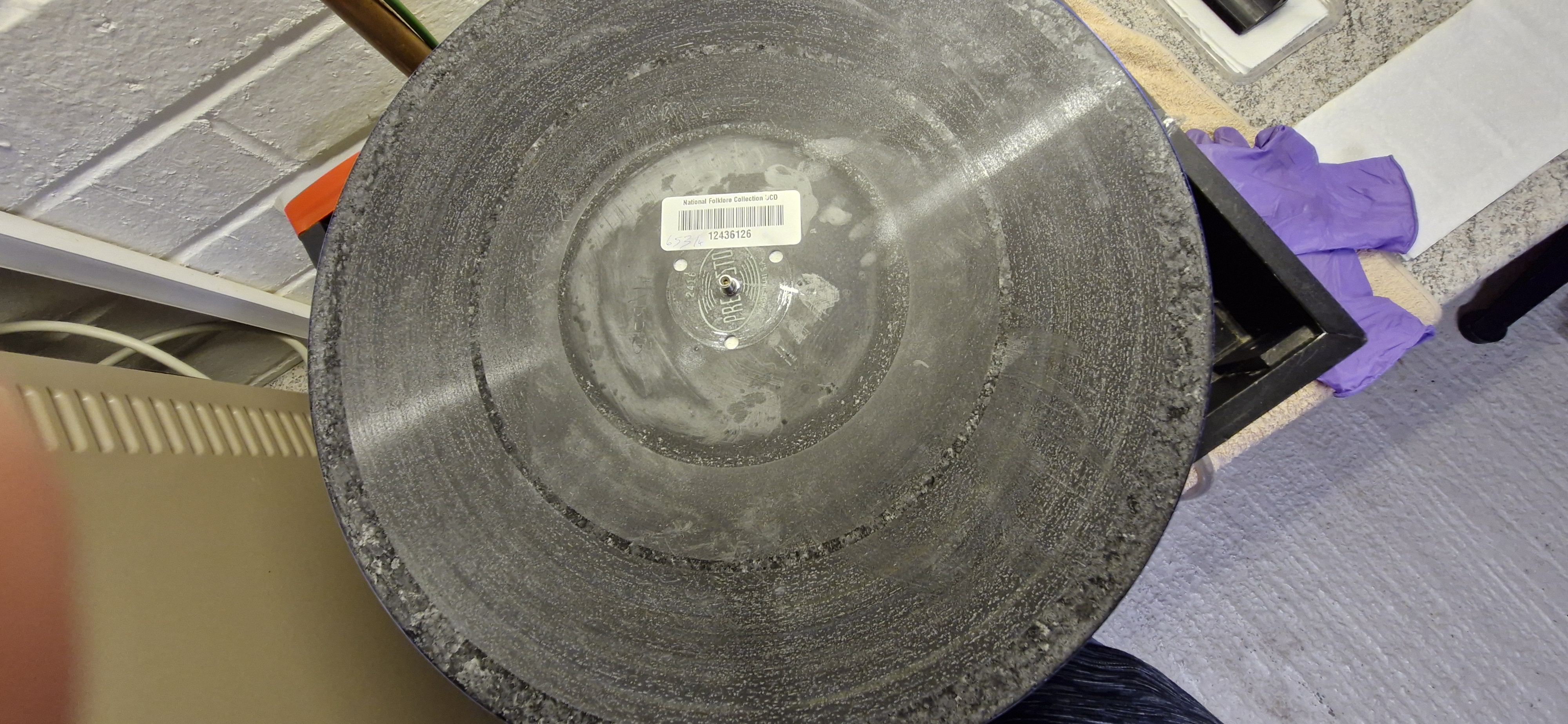
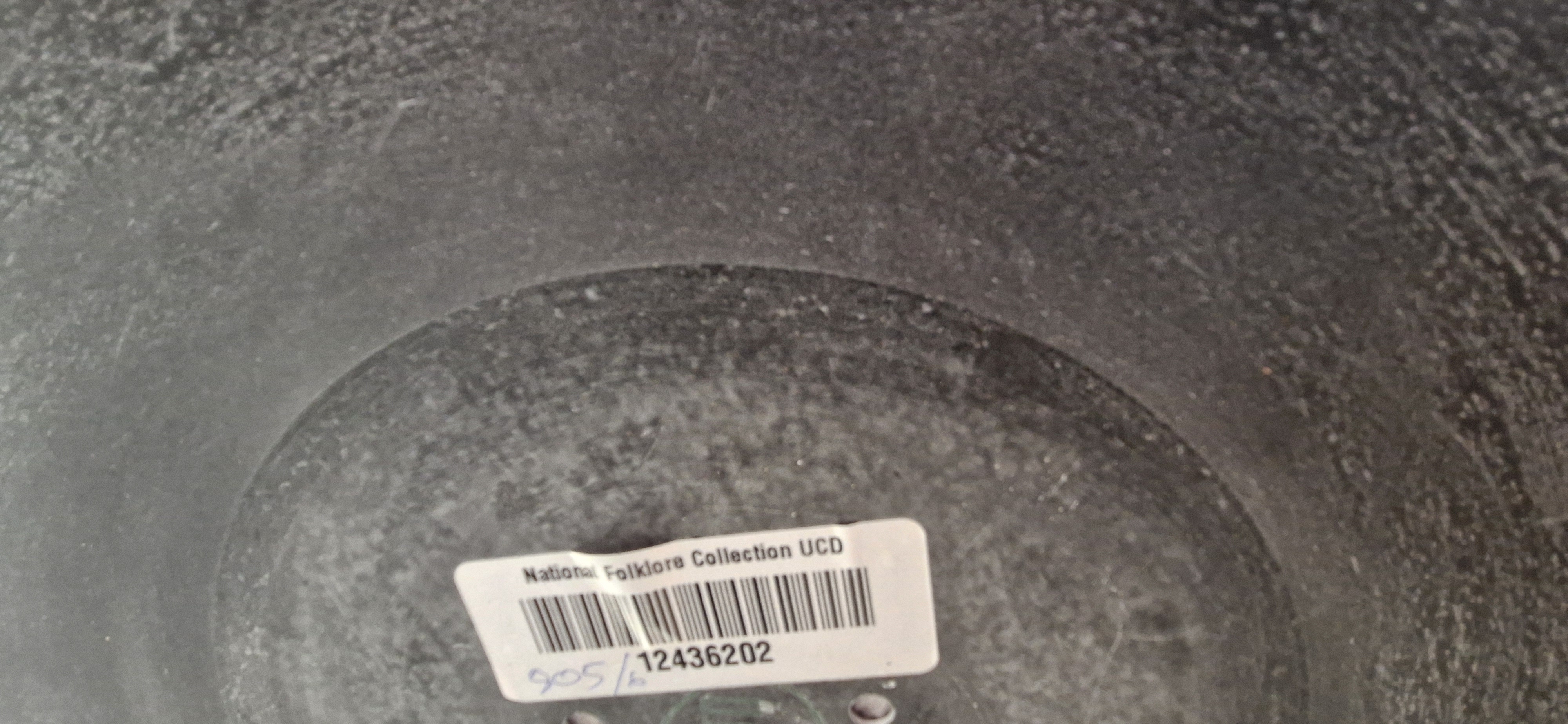
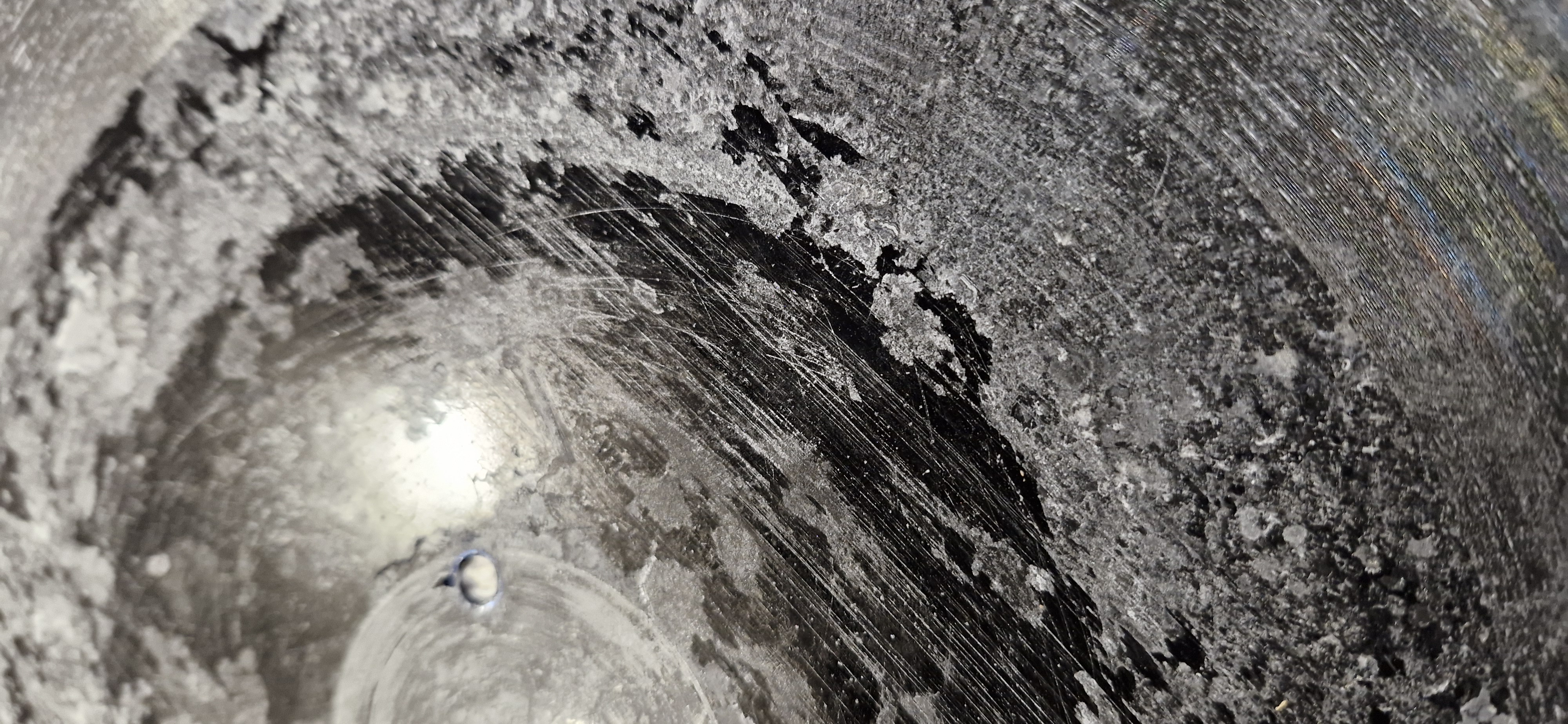
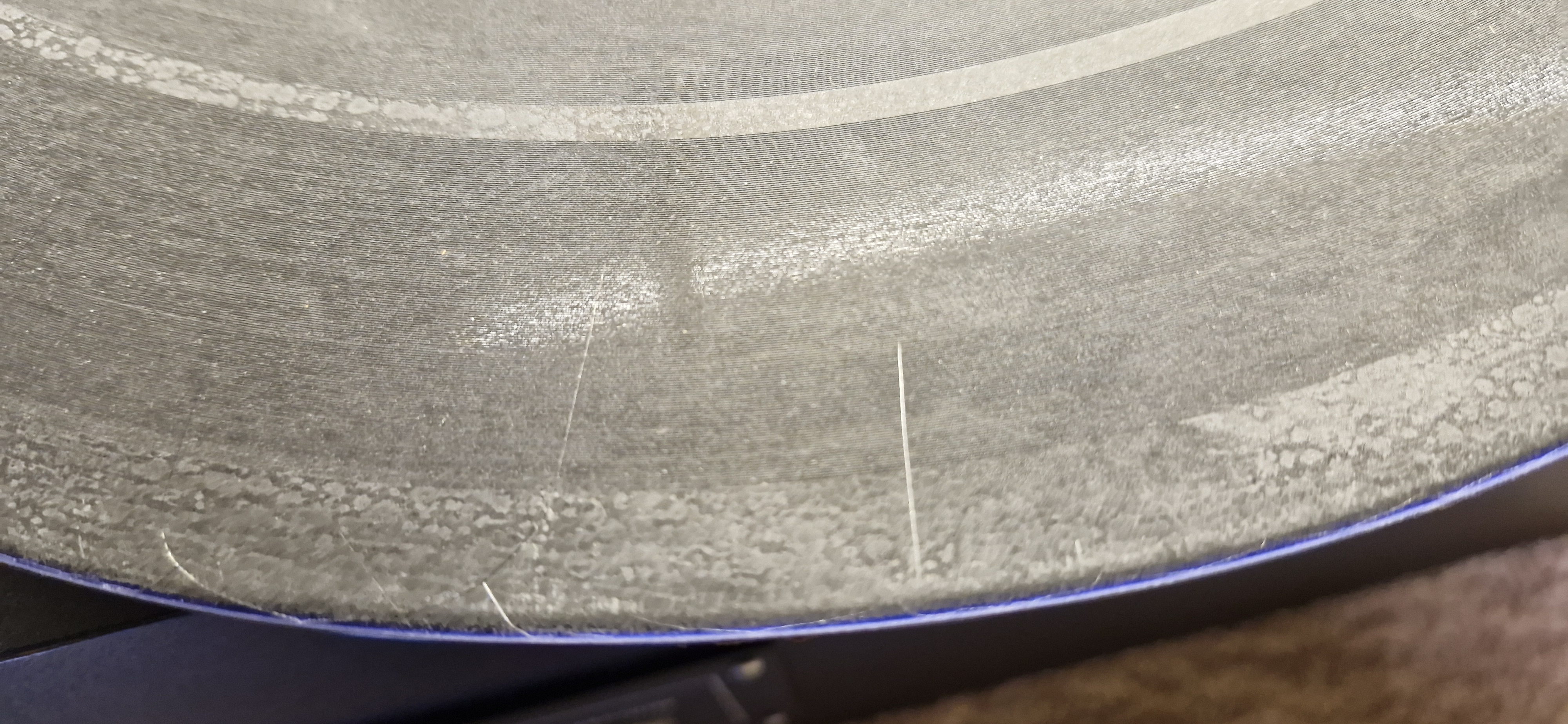
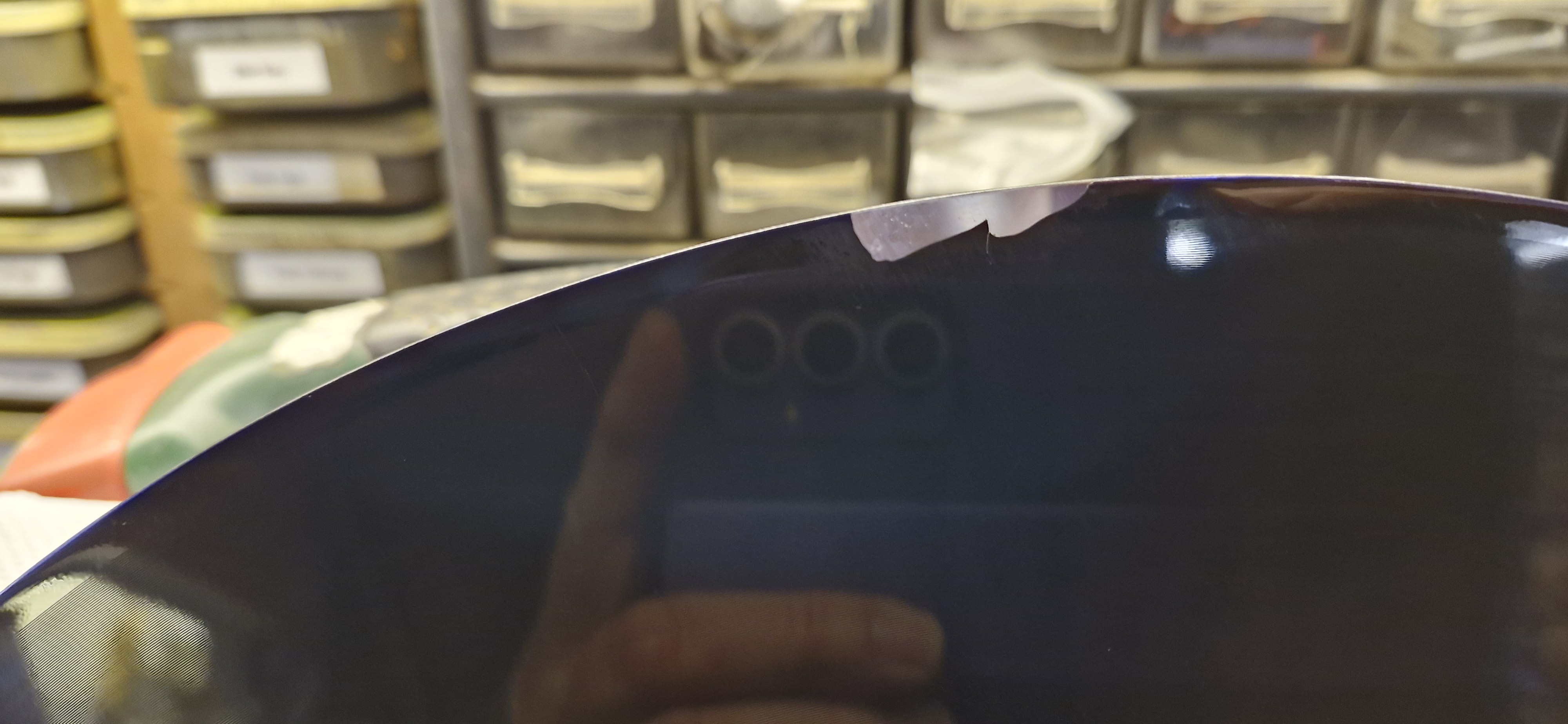
The condition of the collection varied considerably. Some discs carried substantial deposits of palmitic acid and other residue, while others showed corrosion, heavy surface contamination, scratches, cracks or deterioration to the acetate itself.
Before digitisation, every disc was individually assessed and cleaned on both sides. The cleaning process was designed to remove surface contamination and palmitic acid while taking particular care not to introduce additional damage to the recording surface.
The cleaning and handling approach followed archival conservation principles, using a controlled, minimally interventive process appropriate to fragile historical sound recordings.
Specialist cleaning
One of the recurring preservation challenges within the collection was the presence of palmitic acid and associated white or grey surface deposits. These deposits can interfere with the stylus, affect tracking and contribute to poor playback results.
The modified VPI HW-16.5 vacuum cleaning machine was used as part of the controlled cleaning process. The machine was adapted to accommodate the large discs in this collection, allowing the surfaces to be cleaned carefully before transfer.
Cleaning was carried out before digitisation rather than relying on post-processing to compensate for contamination introduced during playback. This was an important part of preparing the original discs for the best possible transfer.
Specialist playback
The physical size and condition of the discs required specialist playback equipment and careful stylus selection.
An EMT950 turntable was modified to accommodate the large discs in the collection and provide stable, controlled playback during the transfers.
The VPI HW-16.5 vacuum cleaning machine was similarly modified to allow the large discs to be cleaned safely and consistently.
A 2.0 thou conically truncated diamond stylus fitted to a Shure M44-7 moving-magnet cartridge was used for more than 95% of the transfers.
Where individual discs did not produce satisfactory results with the 2.0 thou stylus, 2.8 thou and, very occasionally, 3.5 thou conically truncated styli were trialled. These changes generally made little or no sonic improvement and were often slightly less successful.
Project workflow
The project combined physical conservation preparation with specialist analogue playback and high-resolution digital capture.
Each acetate disc was inspected for condition, contamination, damage, residue and playback risks.
Both sides of every disc were carefully cleaned, including treatment to remove palmitic acid and surface deposits.
The cleaned discs were played using the modified EMT950 and specialist cartridge and stylus setup.
Transfers were captured as 24-bit / 96 kHz WAV files for high-resolution preservation and future access.
Digital preservation
All transfers were made to uncompressed WAV files at 24-bit / 96 kHz. This provides a high-resolution digital master suitable for archival storage, future processing and controlled access.
The emphasis throughout the project was on obtaining the best possible signal directly from the original acetate discs, using appropriate physical preparation and specialist analogue playback rather than depending on digital correction after the transfer.
Every disc was handled individually, cleaned on both sides, assessed for playback and transferred at 24-bit / 96 kHz. The result is a consistent high-resolution digital record of a significant historical sound collection.
Project gallery
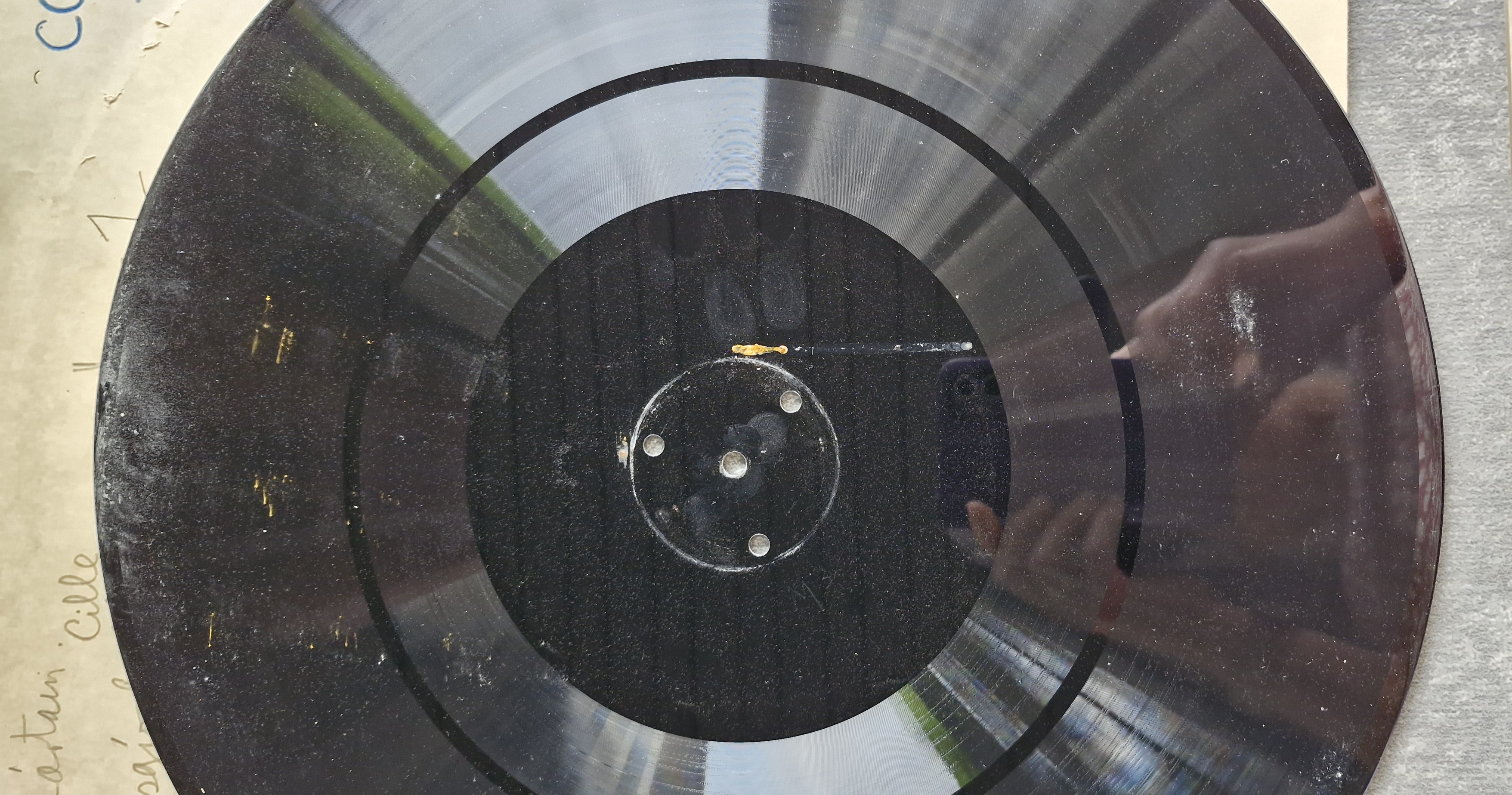
The photographs below show some of the condition issues encountered during the project, including residue, corrosion, cracking and deterioration to the acetate surfaces.
Project summary
The Dublin University National Folk Collection project demonstrates the importance of combining conservation-aware preparation with specialist analogue playback. The 900 acetate discs were not treated as a simple batch transfer: each required assessment and cleaning, with both sides cleaned before digitisation.
The modified EMT950 turntable provided the playback platform for the large discs, while the modified VPI HW-16.5 enabled controlled vacuum cleaning. A Shure M44-7 moving-magnet cartridge fitted with a 2.0 thou conically truncated diamond stylus was used for the overwhelming majority of the transfers. Alternative stylus sizes were only introduced where an individual disc required further testing.
The final transfers were created as 24-bit / 96 kHz WAV files, providing high-resolution digital masters from this important historical collection.
Oxford Duplication Centre provides specialist audio digitisation, archival sound transfer and media preservation services for museums, universities, archives, businesses and private collections. If you have a fragile or unusual sound collection, we can assess the media and advise on an appropriate digitisation workflow.