Audio preservation • Rare disc collections
Cleaning Rare 78rpm Shellac Records & Fragile Acetate Discs
Historic sound recordings need careful, format-specific handling. From dusty shellac 78s to vulnerable lacquer discs with cracking, flaking or pale surface deposits, the first step is to identify the disc and assess its condition.
Cleaning is not a one-method-fits-all process. The wrong liquid, solvent or mechanical action can cause irreversible damage.
Discuss Your Record Collection →
Why historic records need different treatment
Rare records may contain family history, music, interviews, broadcasts, oral testimony or unique archival content. Shellac records, vinyl records and instantaneous lacquer discs are made from different materials and can react differently to moisture, solvents, handling and playback. Identify the carrier, inspect the surface and consider its condition before attempting to clean it.
Shellac 78s and acetate discs are not the same
Historic commercial discs78rpm shellac records
Many 78s are made from a shellac-based compound containing mineral fillers and other ingredients. They are rigid and brittle, and can crack or chip if flexed, knocked or poorly supported. Paper labels may stain, bleed or lift if they become wet.
Instantaneous recordingsAcetate or lacquer discs
Many discs called “acetates” have a lacquer coating over a core such as aluminium or glass. With age, the coating can shrink, crack, bubble or detach. A white or greasy deposit may be a sign of chemical deterioration rather than ordinary dirt.
Identify firstOther disc materials
Not every old disc is shellac or lacquer. Some use unusual substrates or coatings, and some have paper or card layers beneath the playing surface. Do not assume a familiar record-cleaning product or machine is suitable until the format is identified.
Common cleaning problems and risks
Alcohol-based record cleaners
Alcohol can damage shellac and lacquer surfaces. A cleaner intended for modern vinyl should not automatically be used on shellac 78s or fragile instantaneous discs. Avoid alcohol-based products and unverified solvents.
White, cloudy or waxy deposits
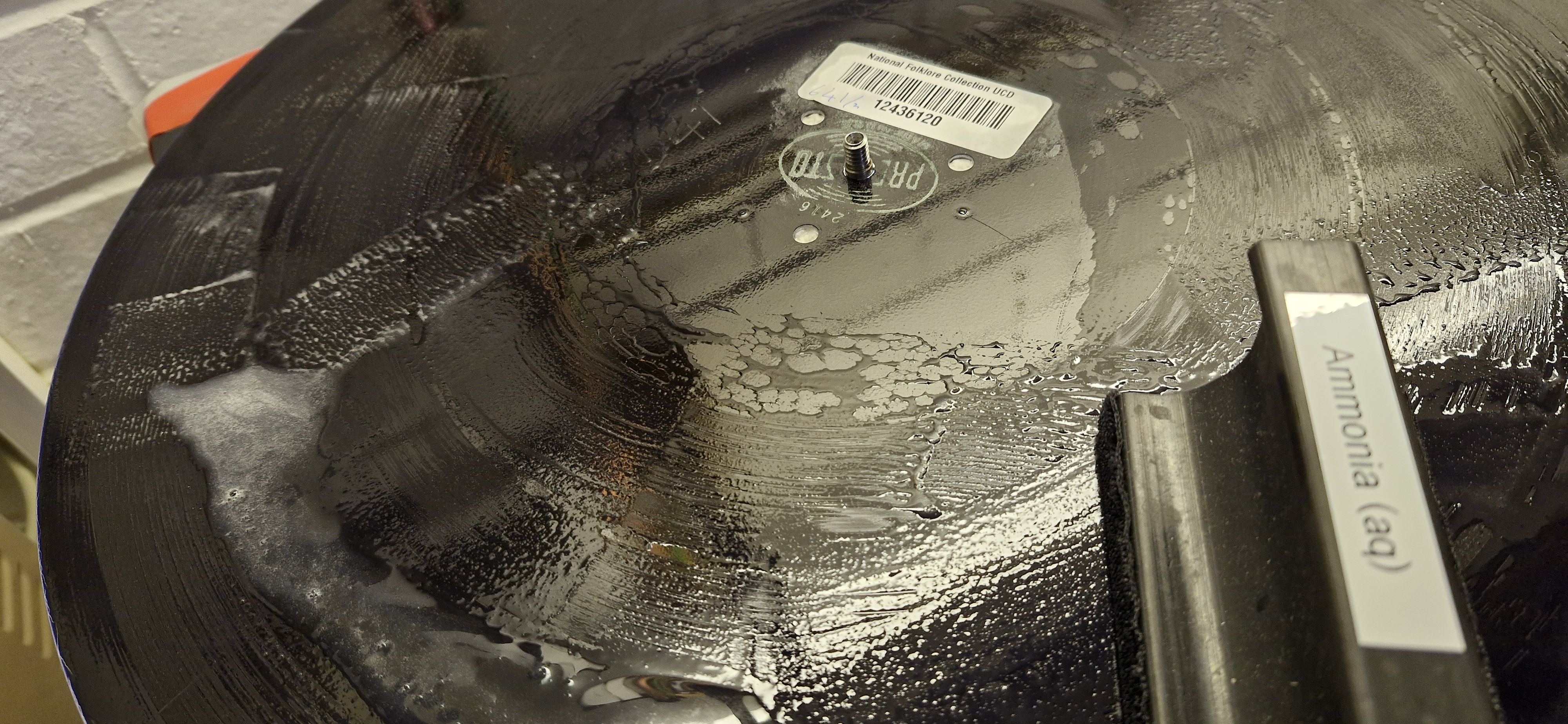
On lacquer discs, a pale or greasy deposit may be exuded plasticiser breakdown products, sometimes mistaken for mould. Appearance alone may not identify the cause. Do not scrub it or use household cleaners to test it.
Cracking, flaking and delamination
If lacquer is separating from its core, liquid or mechanical action may worsen the damage. A brittle or flaking surface may be unsuitable for routine wet cleaning and needs specialist assessment.
Dust and groove debris
Debris can increase noise and interfere with stylus tracking, but removing it must not cause greater damage. The safest approach depends on the material, the type of contamination and the disc's condition.
Labels and handwritten notes
Labels, annotations and matrix information may be historically important. Moisture can stain paper labels, while vigorous cleaning may remove markings. Keep labels dry and document useful information before treatment.
Playback damage
Unsuitable stylus size, excessive tracking force, poor equipment condition or damaged grooves can compromise playback. Rare 78s and instantaneous discs may require format-specific equipment and experienced handling.
Important: Do not use alcohol on shellac or lacquer discs. Do not soak, scrub, use an ultrasonic bath, or try to remove deposits from a flaking acetate disc without appropriate specialist advice. Some carriers should not be wet-cleaned at all.
What to do before cleaning a rare record
Identify the disc
Check the label, catalogue or matrix numbers, diameter, approximate age and any recording information. If unsure whether it is shellac, vinyl or lacquer, treat it as unidentified until assessed.
Inspect without rubbing
Look for cracks, chips, cloudy or greasy film, mould-like growth, flaking, bubbles or exposed substrate. Avoid wiping unstable surfaces to see whether a deposit comes off.
Handle and support carefully
Support the disc with both hands, avoid pressure on the edges and never flex it. Keep fingers away from grooves where possible, and avoid touching or wetting the label.
Decide whether cleaning is appropriate
Routine dust removal and specialist treatment are different tasks. Some degraded discs should be transferred before any cleaning attempt; others may need expert cleaning first.
Use suitable playback equipment
A well-maintained turntable and stylus suited to the recording can reduce avoidable wear. Do not force playback if the disc is visibly unstable or the stylus cannot track safely.
Consider timely digitisation
Where safe playback is possible, a high-quality digital transfer can preserve access to the content and reduce the need to handle the original repeatedly. Cleaning cannot reverse groove wear or chemical deterioration.
At a glance: risks and sensible next steps
| What you notice | Possible issue | Prudent next step |
|---|
| Dust in the grooves | Surface debris affecting playback | Use gentle, format-appropriate dust removal; avoid aggressive rubbing. |
| White or greasy film on a lacquer disc | Possible plasticiser exudation or another surface condition | Do not assume it is ordinary dirt or mould; seek specialist assessment. |
| Cracking, lifting or flaking lacquer | Possible delamination or coating failure | Avoid routine wet cleaning, minimise handling and consider prompt transfer advice. |
| Cracked or chipped shellac | Brittle disc at risk of breakage | Support carefully; do not flex, scrub or glue it for playback. |
| Unknown disc material | Potentially incompatible cleaning method | Identify the format before selecting any liquid, solvent or cleaning machine. |
These are general preservation pointers, not a treatment recipe. The construction and condition of each disc determine what can safely be done.
Cleaning is only one part of audio preservation
A successful transfer depends on the original's condition, suitable playback equipment, careful handling and an appropriate capture workflow. Cleaning may help where removable contamination is present, but it cannot restore information already lost through groove wear, breakage or chemical deterioration.
For rare and unique recordings, consider digitisation promptly once a safe playback route has been established. A digital master protects access to the recorded content, while the original should continue to be stored and handled as a vulnerable artefact.
Our approach: Oxford Duplication Centre can discuss your collection, the condition of unusual or fragile discs and suitable digitisation options. We do not recommend applying one cleaning process to every historic recording.
Further preservation guidance