
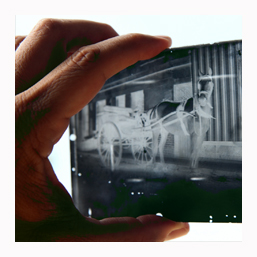
Collodion wet plates
Careful handling and professional digital capture for historic photographic material.
We specialise in digitising historic glass plate negatives from the 1850s through the early twentieth century, including collodion wet plates and gelatin dry plates.
Glass plate negatives can suffer cracking, haze, efflorescence and other deterioration. Careful handling and controlled scanning help preserve the photographic information they contain.
Careful handling and professional digital capture for historic photographic material.
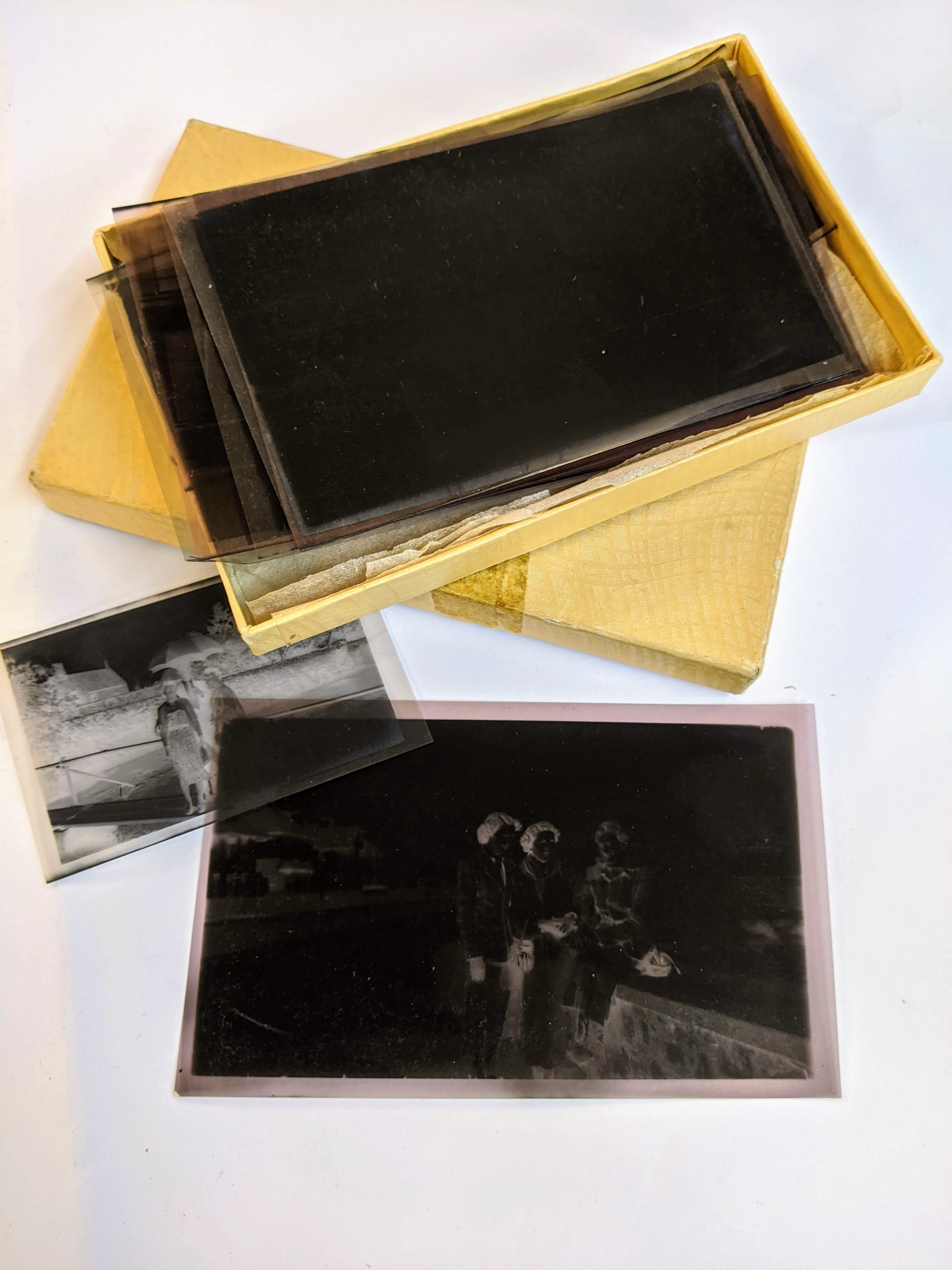
Suitable for family archives, private collections, museums and heritage organisations.
Digital files make valuable photographic collections easier to preserve and access.
Identify your photographic film or plates, view our digitisation prices and calculate an estimate. Quantity discounts are automatically applied.
Common family photographic film formats. Select the image that most closely resembles the film you have.
Smaller cartridge-based photographic formats. APS film is normally supplied in cartridges, while 110 film is a compact cartridge format.
Medium format film is available in several image sizes. The actual frame size depends on the camera and format. Select the closest format below, then choose the film base in the calculator.
Historic glass plate negatives and positive lantern slides. These materials may require additional handling and assessment.
Large-format sheet film and specialist photographic transparencies, including historic and technical collections.
We can produce digital files suitable for preservation, access, research, publication and sharing. Output requirements can be discussed according to the condition, size and intended use of the original material.
For advice on identifying, preparing or digitising photographic film, contact Oxford Duplication Centre on 01865 457000.
Contact Oxford Duplication Centre